

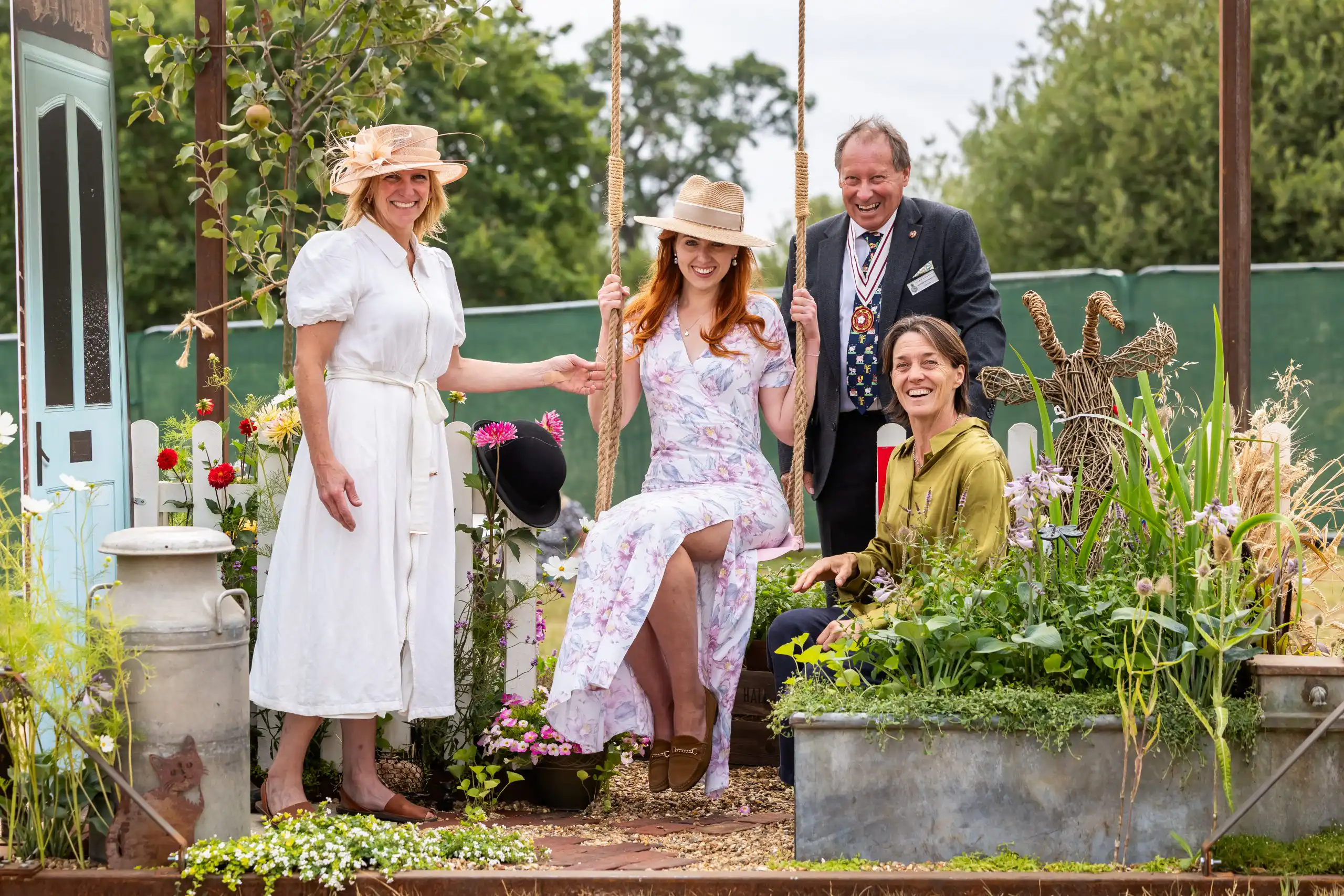
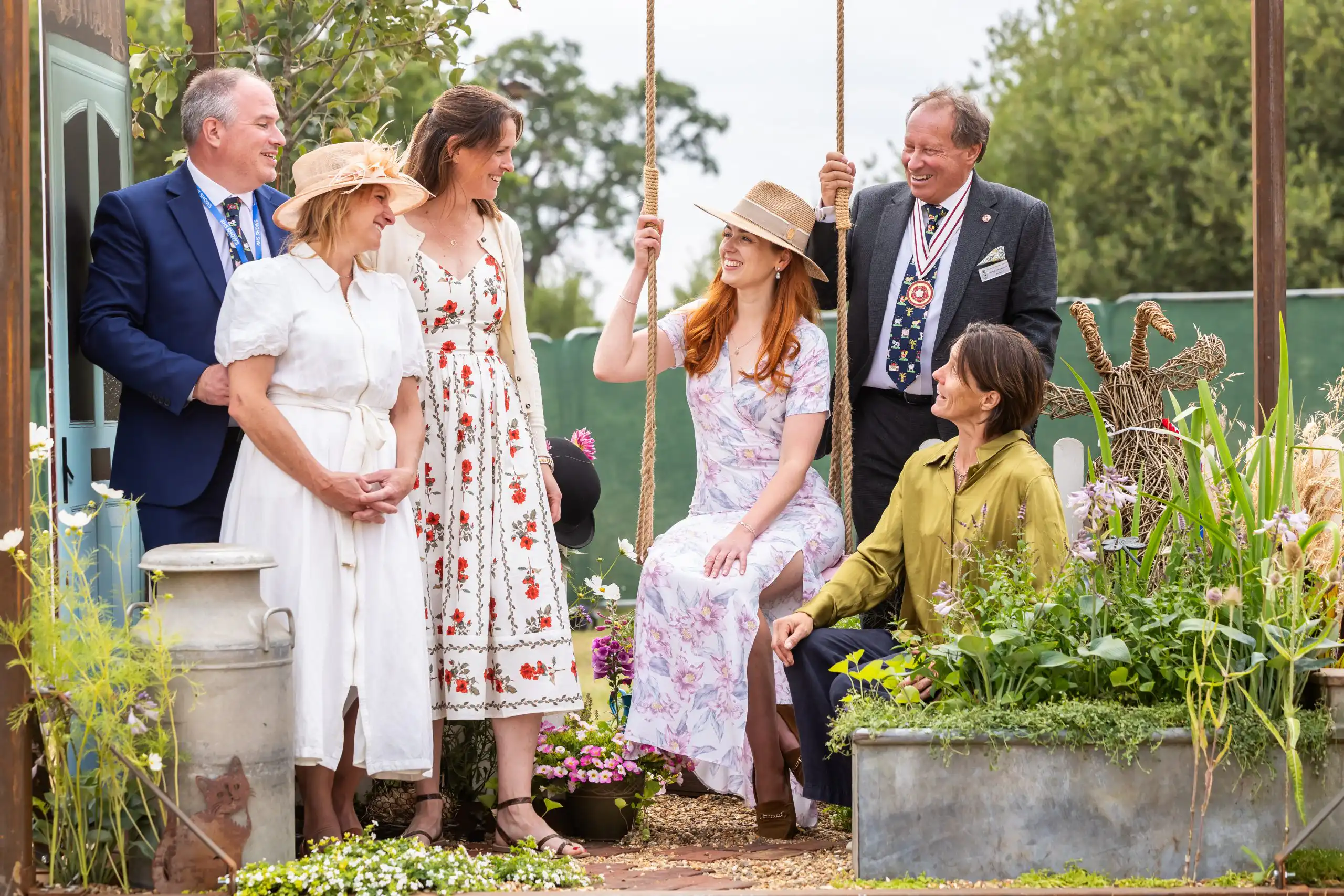
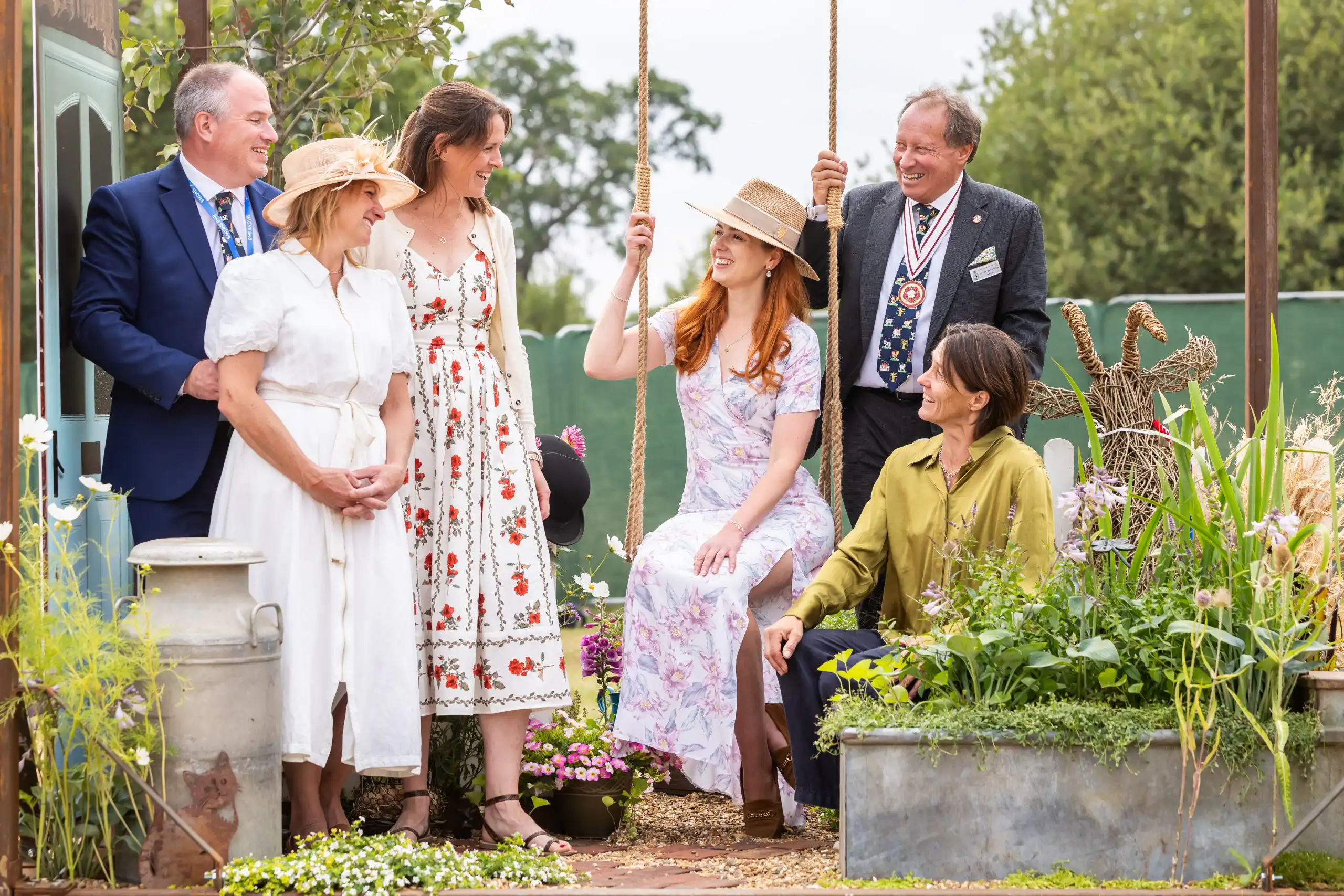
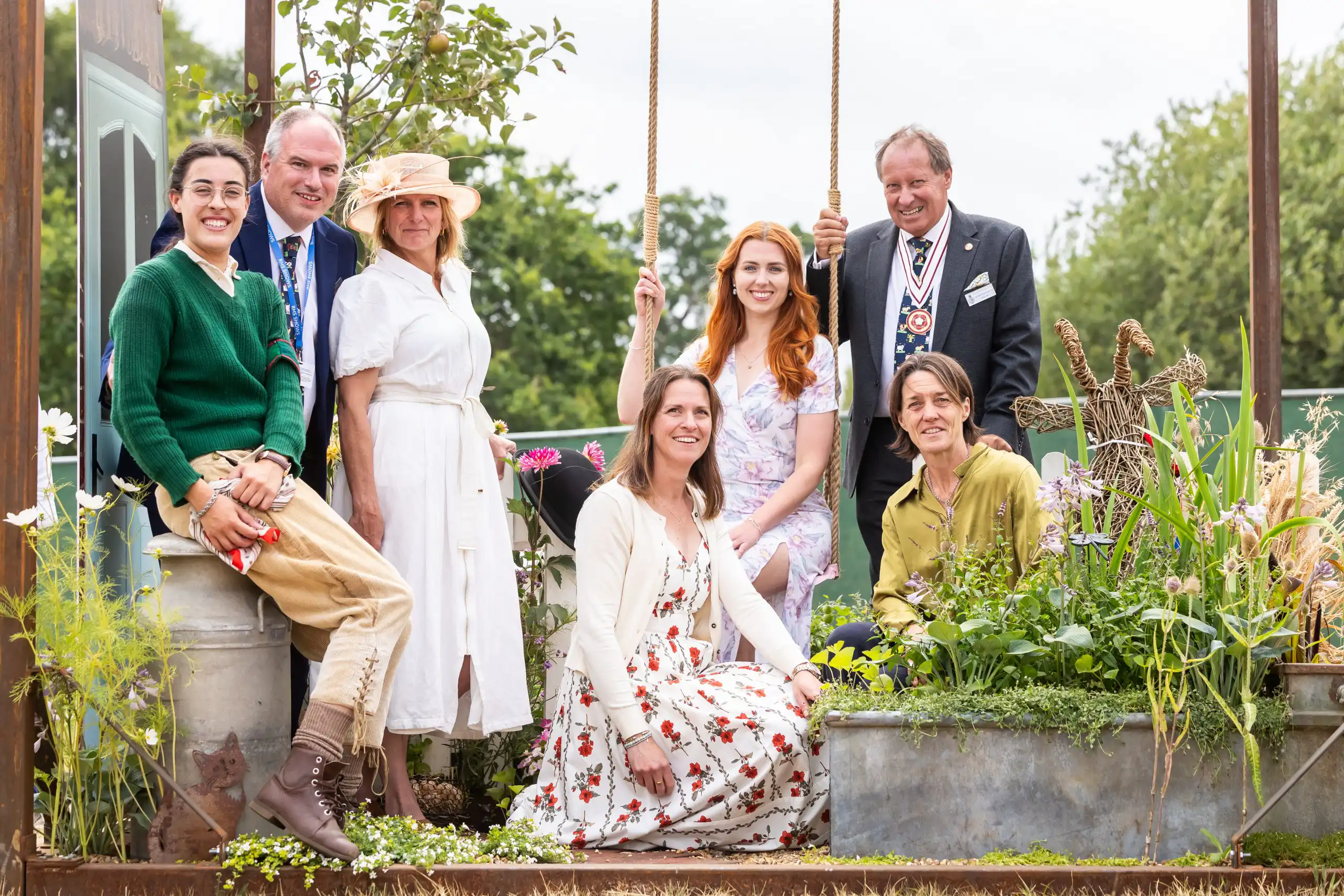
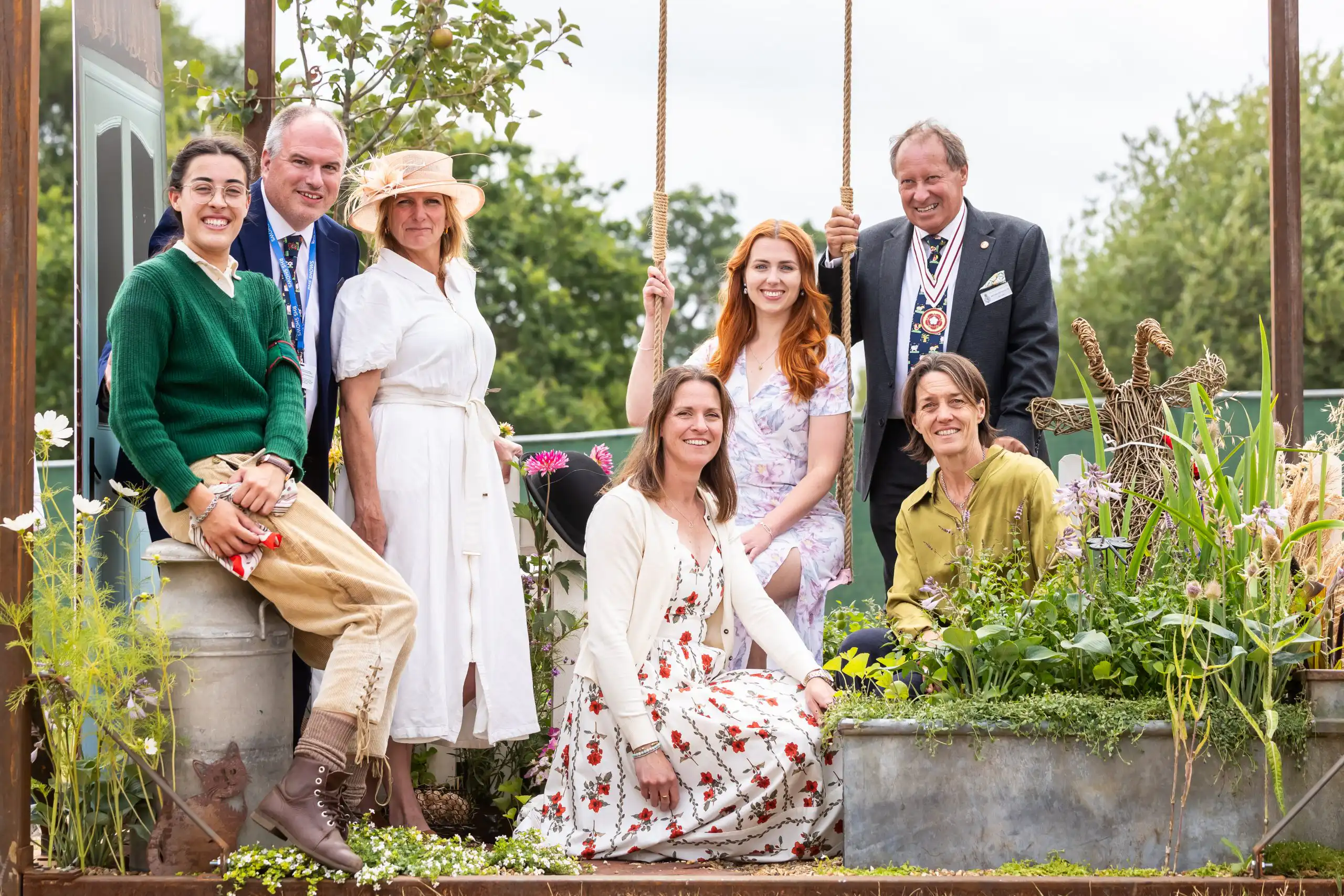
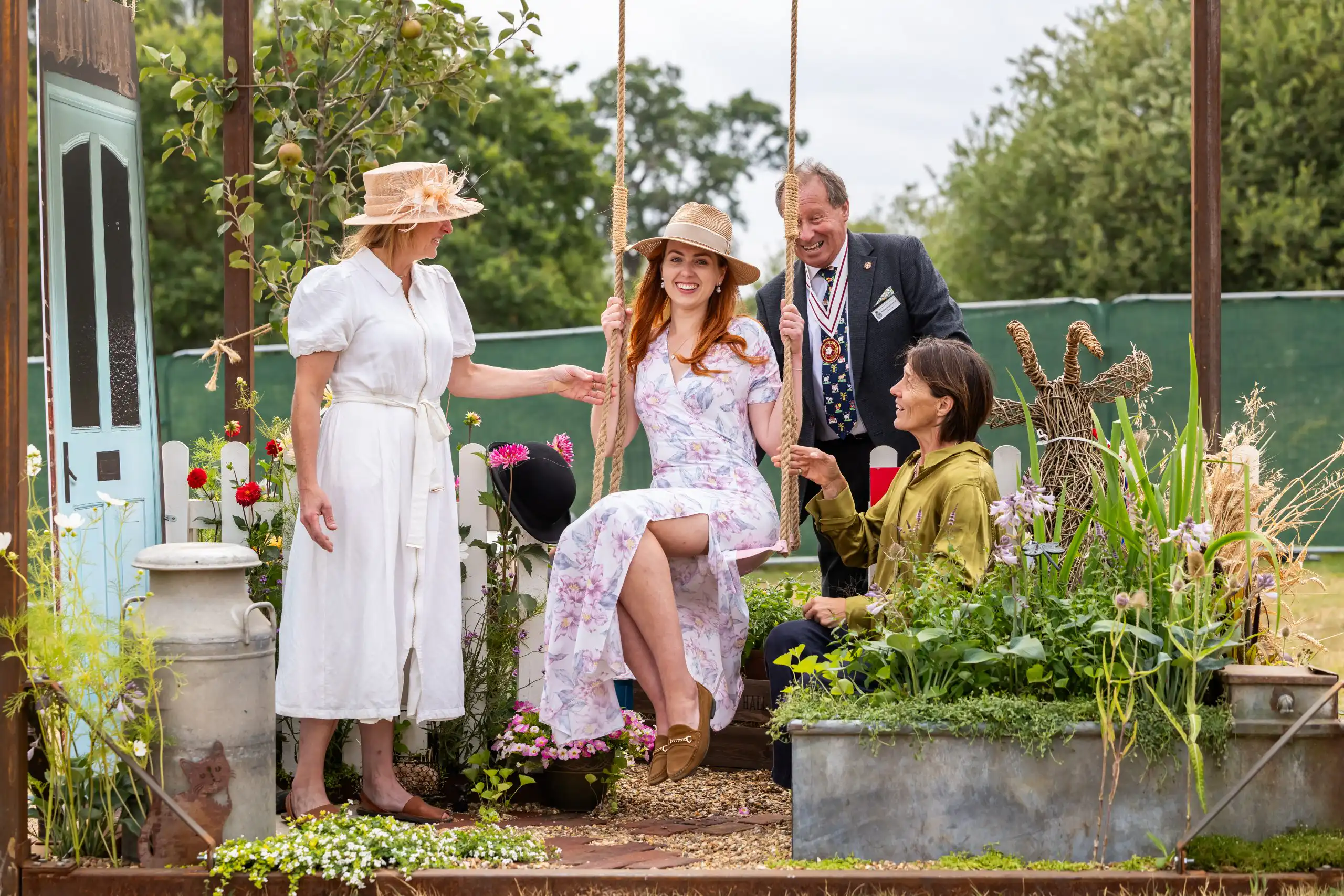
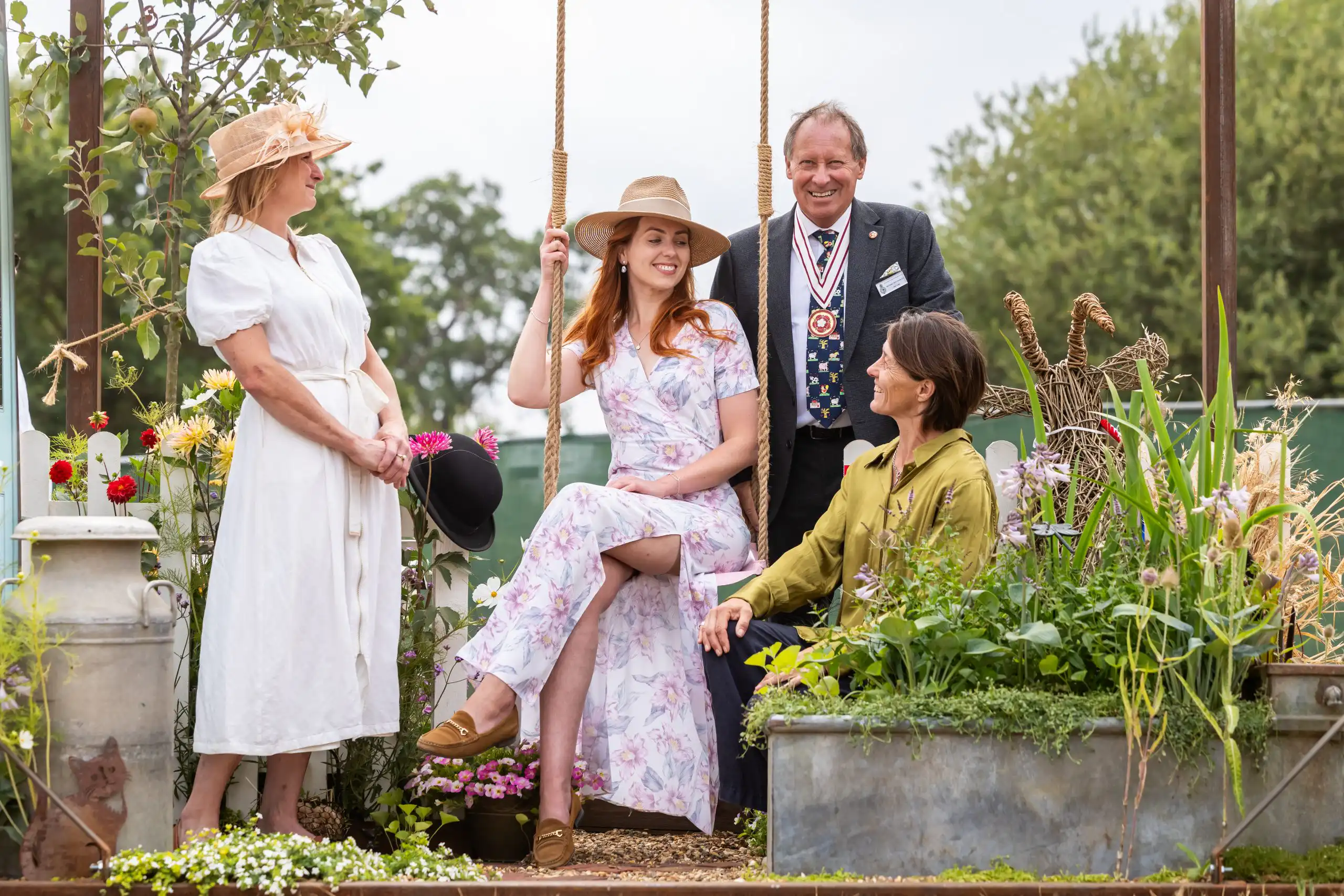
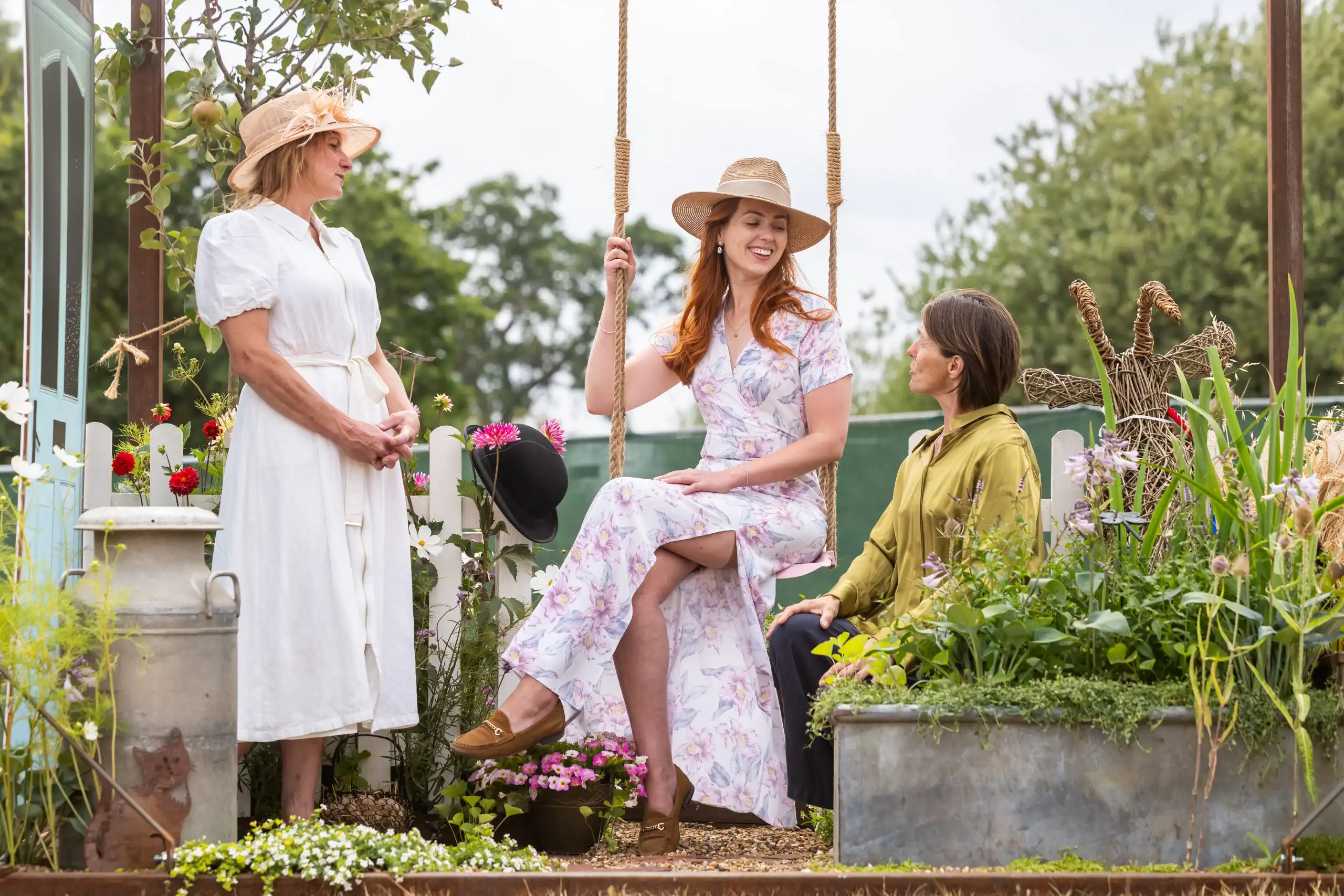
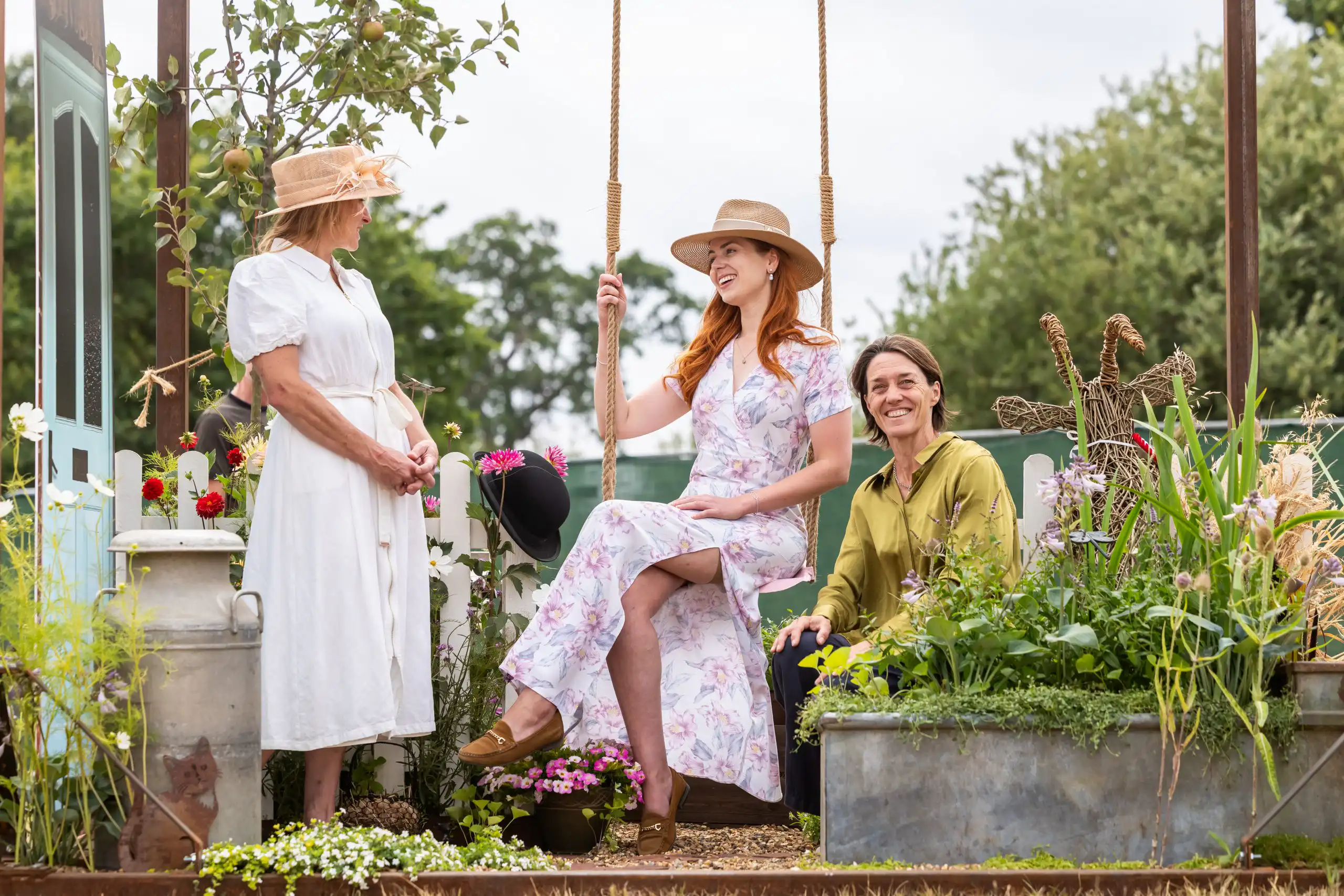
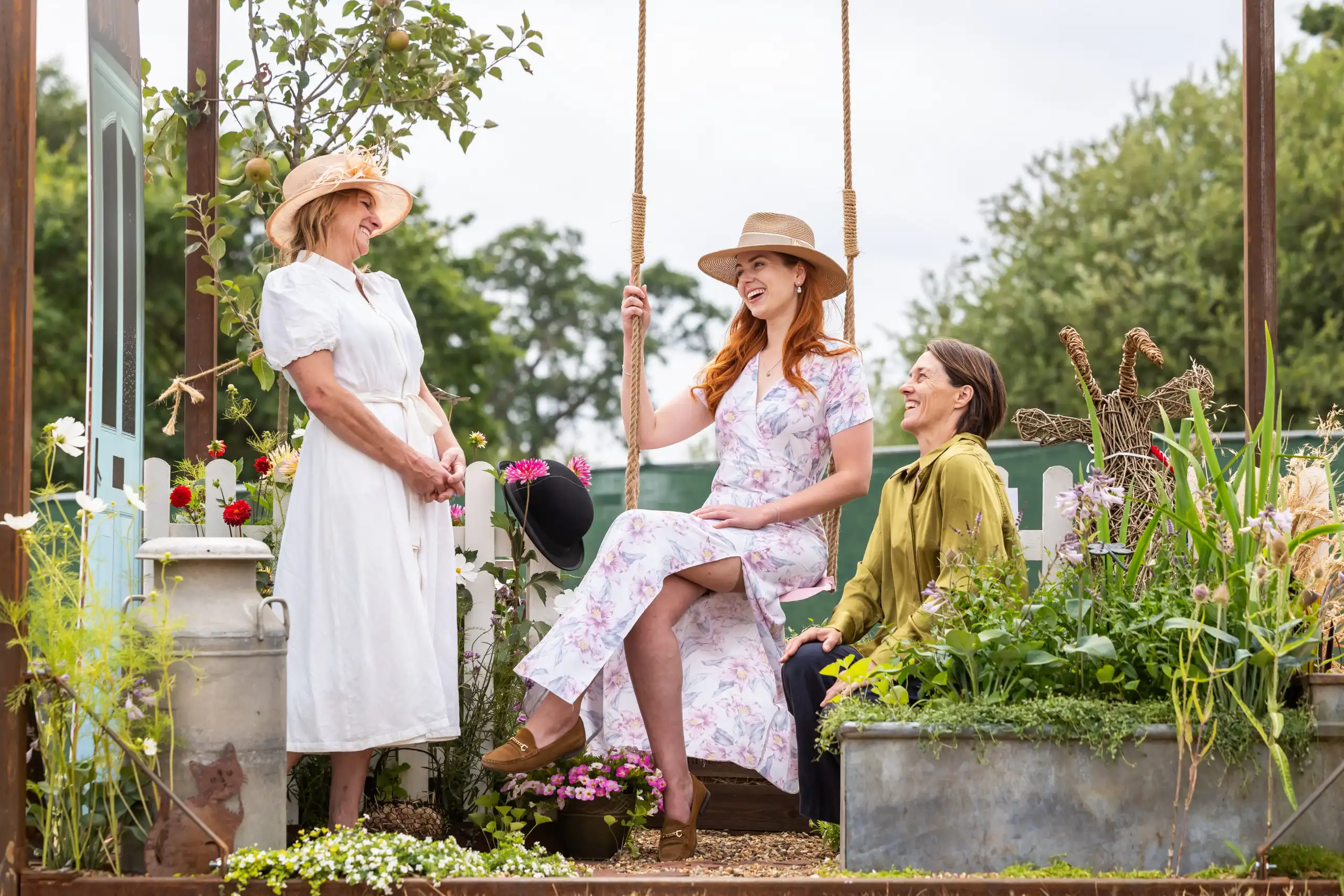
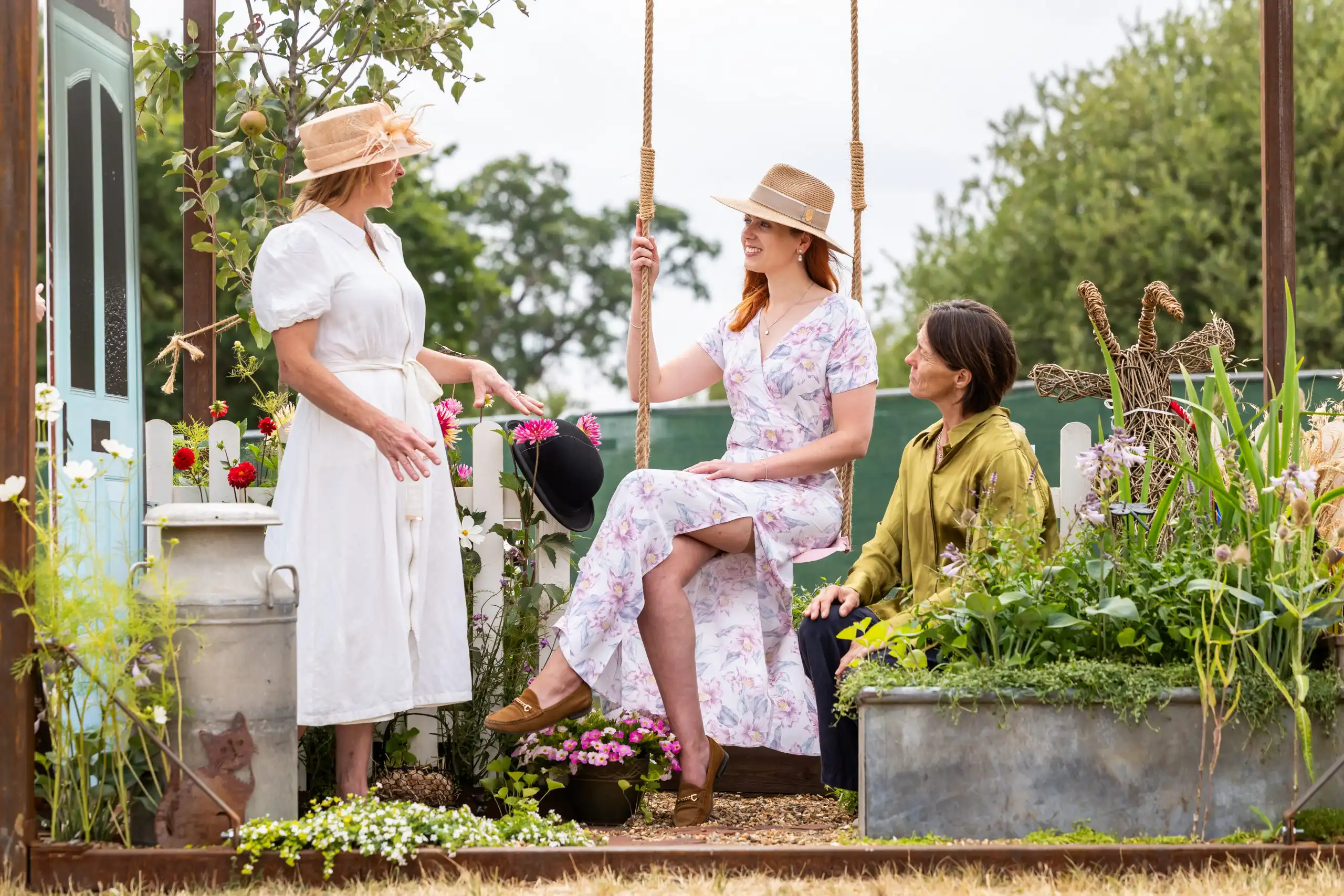
In July, the Royal Norfolk Agricultural Association (RNAA) was delighted to take part in the RHS Sandringham Flower Show with a Community Cube Garden celebrating the vital role women have played, and continue to play, in farming and agriculture.
Inspired by the International Year of the Woman Farmer, the garden explored the contribution of women to British farming, while also reflecting Norfolk’s rich agricultural heritage and the RNAA’s longstanding connection with Sandringham.
The project was led by Kristopher Harper Alison for the RNAA, working alongside garden designer Kate Thomson.
The garden was designed as a journey through four interconnected areas, each representing a different aspect of women’s work on the land.
From the Cut Flower Garden and Vegetable & Fruit Garden, celebrating growing, food production and the contribution of women as growers and innovators, to the Farmyard and Farmhouse Door, the garden explored the many different roles women have played across agriculture, from caring for livestock and producing food to balancing the responsibilities of home and farm.
Despite its compact footprint, the garden successfully captured the feeling of a working farm. A Massey Ferguson seat and a goat quickly became standout features, helping to draw visitors into the space and encouraging conversations about farming and rural life.
Kristopher said:
“The Community Cube was a fantastic opportunity to highlight the RNAA and celebrate Women in Farming. It also allowed us to reflect on the close relationship between Sandringham and farming heritage. Overall, it was a great success and a project the team can be very proud of.”
Kate Thomson’s design played a key role in bringing the concept together. Her ability to adapt to changes throughout the project helped create a garden that remained coherent and true to its story.
The location at Sandringham was particularly significant.
During the Second World War, the Sandringham Estate was home to a major Women’s Land Army presence, with women living, training and working across the farmland. This connection to Norfolk’s agricultural history provided a fitting backdrop for a garden celebrating the women who have shaped farming, both past and present.
A dedicated interpretation panel explored the story of the Women’s Land Army, including its role in Norfolk. For many visitors, this provided an opportunity to discover more about a part of local history they were unfamiliar with.
The panel prompted thoughtful conversations about the contribution of women to agriculture and how the role of women in farming has evolved over time. Visitors were particularly interested to learn about the scale of the Women’s Land Army presence in Norfolk and the vital role these women played in food production during wartime.
One of the highlights of the project was the response from visitors.
People were keen to share their own memories of farming, rural life and the Royal Norfolk Show, creating conversations that connected the garden’s history with their personal experiences.
One visitor recalled attending the Royal Norfolk Show when it was held at Sandringham in 1950, while others shared more recent memories of the Show and their connections with the countryside.
For Kristopher, this engagement was one of the most rewarding aspects of the project:
“The storytelling really worked. Even within such a compact footprint, we were able to represent a working farm and create something that encouraged people to stop, look and talk.”
The garden also provided an opportunity to celebrate the women shaping agriculture today, creating a link between the legacy of the Women’s Land Army and the women currently working across farming, horticulture and the wider agricultural sector.
Although the garden faced challenging conditions, including extreme heat and prolonged dry weather, it successfully achieved what it set out to do, creating a welcoming and engaging space that celebrated women in farming and encouraged visitors to explore Norfolk’s agricultural heritage.
Looking ahead, Kristopher believes future Community Cube projects could explore how a garden might be adapted or upscaled into a more permanent setting, with greater consideration given to how planting and key features could transition beyond the show environment.
For the RNAA, the project was a wonderful opportunity to celebrate an important part of Norfolk’s agricultural story and to highlight the contribution of women across generations.
Above all, Women on the Land provided a space to recognise the women who have helped shape farming in Norfolk, from the Women’s Land Army to the women growing, farming, caring for livestock and leading across the sector today.
The RNAA would like to thank everyone who helped bring the Community Cube Garden to life:
Barcham Trees; Fenwick & Tilbrook; Harper & Debbage; James Cawston (JMC Garden and Landscaping Services); Josh Clarke (Grounded Garden Design); Kenny Barnes; Norfolk Museum Service (Gressenhall Rural Life Museum); PlantGrow; Practical Plants; Richard Love (Life in Willow); and Toby Mitchell.
With thanks also to the RHS for the opportunity to be part of the RHS Sandringham Flower Show.
Sign up to our newsletter to hear the latest news from the Royal Norfolk Agricultural Association.