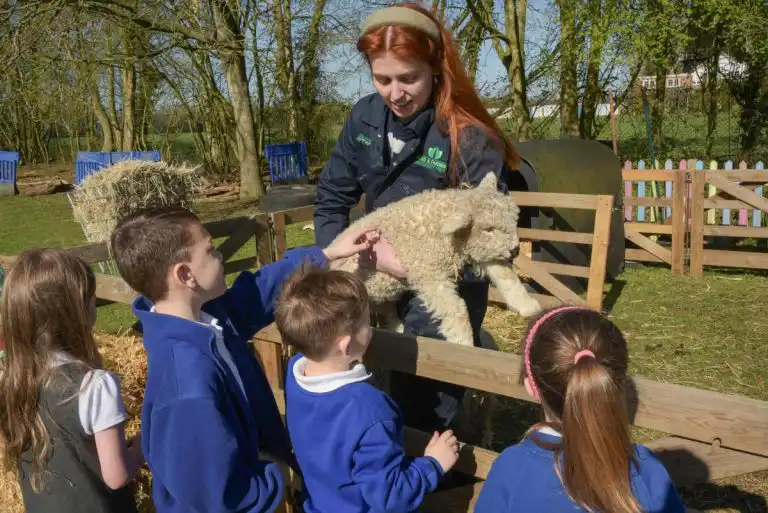
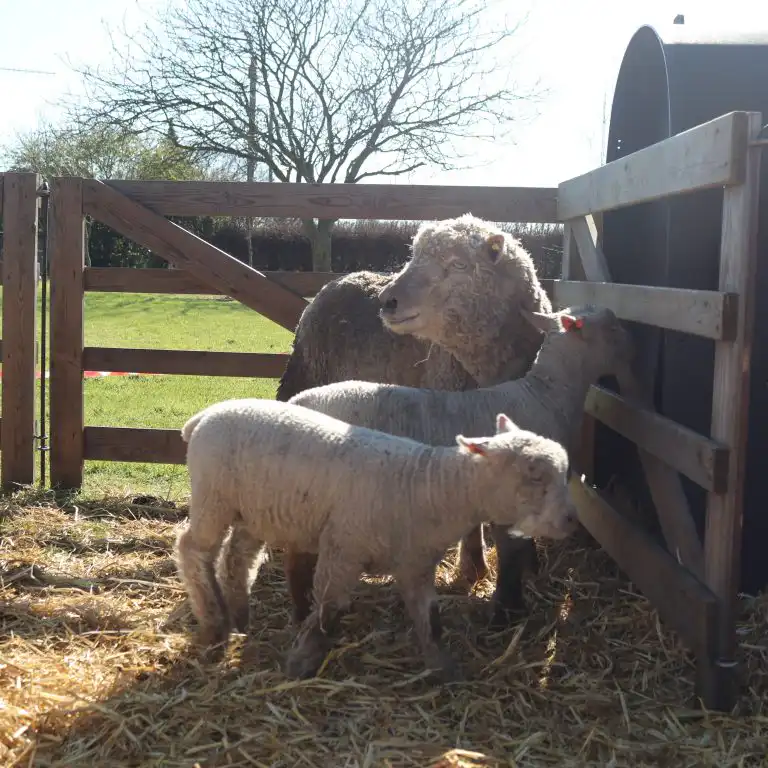
Learn about livestock educational experience delivered by the Food & Farming Discovery Trust (Image: EDP)
Applications are now open for ‘Learn about Livestock 2027’, giving 20 Norfolk schools the opportunity to welcome a ewe and her lamb(s) onto their school grounds for an exciting, unique week-long educational experience.
Delivered by the Food & Farming Discovery Trust (FFDT) in partnership with the Rare Breeds Survival Trust (RBST), Three Rivers and Chapelfield Farm Vets, and the Royal Norfolk Agricultural Association (RNAA), the programme helps children and young people gain a deeper understanding of farming, food production and animal welfare through direct, hands-on experiences with livestock.
In 2026 alone, ‘Learn about Livestock’ engaged approximately 4,000 students across Norfolk. Since the project first launched in 2019, it has now provided meaningful food and farming experiences for around 18,000 young people from primary schools, secondary schools, sixth forms and specialist SEND settings across the county.
‘Learn about Livestock’ offers participating schools the opportunity to host a ewe and her lamb(s) on site for a full school week, allowing pupils to experience animal husbandry first-hand while exploring topics such as food production, animal welfare, sustainability and the journey from farm to fork.
On the morning of Monday 15 March 2027, the sheep will be delivered to each participating school by their owners, FFDT’s dedicated team of volunteer livestock lenders. The animals will remain on the school premises throughout the week, giving pupils daily opportunities to observe, handle and care for them under guidance. The sheep will then be collected by their owners on Friday 19 March 2027.
The project week will run from Monday 15 to Friday 19 March 2027, with equipment delivered to schools during the week commencing 8 March 2027 and collected during the week commencing 22 March 2027.
Everything required to care for the animals during the week is provided, including feed, water containers, shelter, expert veterinary support and comprehensive guidance for schools.
To take part, schools will need access to a secure outdoor area measuring approximately 10ft x 15ft (3m x 4.5m), ideally on grass, where the sheep can be safely housed for the duration of the project.
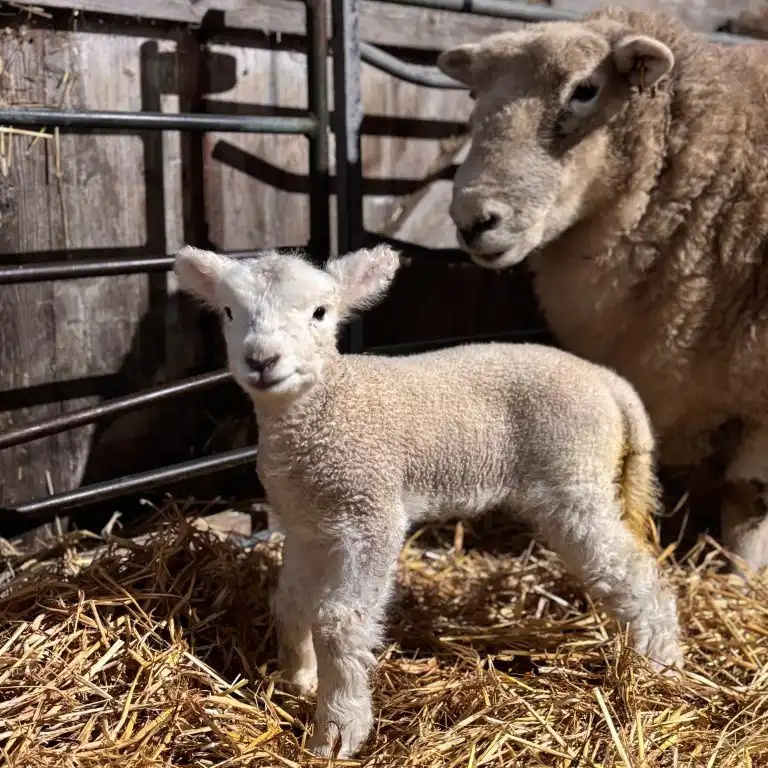
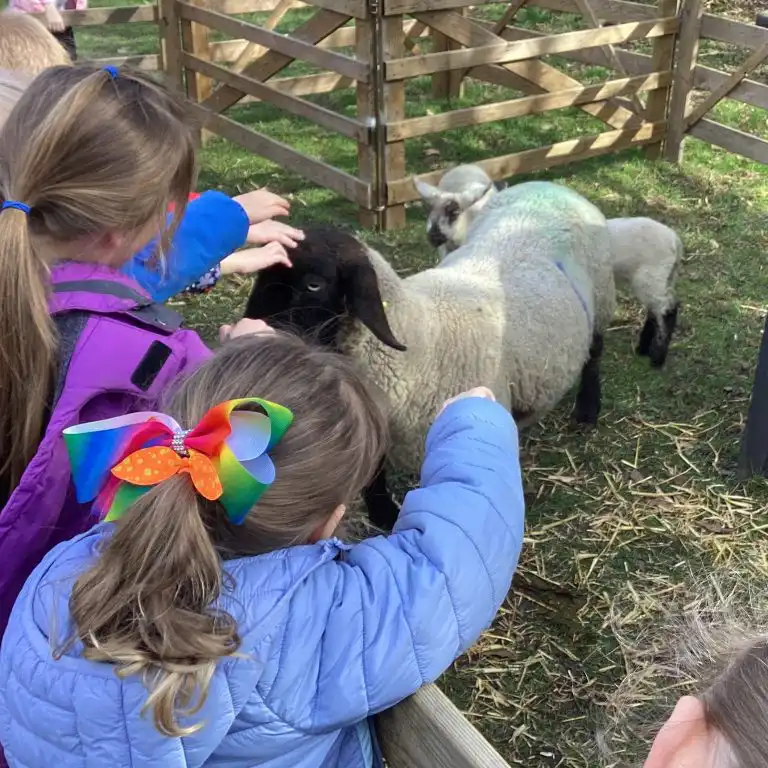
Feedback from schools involved in the 2026 programme highlighted the project’s impact far beyond traditional farming education, with teachers reporting benefits to curriculum learning, emotional wellbeing, responsibility, confidence and pupil engagement.
Mr Briscoe, Old Buckenham Primary School, said “We all absolutely loved this experience. There was such a buzz around the school, with so many children feeling engrossed and engaged by the experience. Many of our children were buzzing to come to school and take part in the week, having a great impact therefore on school attendance and children’s wellbeing and enjoyment of education.”
Mrs Angel, Ormesby Village Junior School, added “We struggle to engage our children, and every child was captivated by the sheep. They have had an enormous impact on wellbeing as well. There has been a calm buzz in the school this week. Everyone has felt energised!”
Schools also highlighted the positive impact the animals had on pupils with additional needs.
Mrs Halls, Barford Primary School, commented “Not only the links to the curriculum-based learning and life skills but also how much it supports the development of the whole child and their regulation for children with additional needs or circumstances.”
Meanwhile, Mrs Hatfield, The Clare School, praised the project’s impact on pupils with complex SEND needs “The presence of the animals had a noticeably calming effect on pupils. Many children showed increased regulation, gentleness and focus when interacting with the sheep. The ‘Learn about Livestock’ project offered a rich, multi-sensory learning experience that supported pupils’ emotional wellbeing, communication, independence and understanding of the world in a way that is difficult to replicate in the classroom alone.”
Participating schools regularly use the presence of the animals as a starting point for learning across multiple subjects, including science, geography, mathematics, art, literacy, PSHE and food education.
In 2026, schools reported activities ranging from studying animal life cycles and livestock breeds to exploring agricultural technology, food production and responsible animal care. Many schools also noted the positive impact the project had on staff wellbeing, family engagement and wider community involvement.
Frances Roberson, Trust Manager at the Food & Farming Discovery Trust, said “Learn about Livestock’ provides a truly unique opportunity for young people to experience farming first-hand. In a county where agriculture plays such an important role, helping children understand where their food comes from and the care that goes into producing it has never been more important.
The feedback we receive from schools is always incredible. Alongside the educational outcomes, teachers consistently tell us about improvements in wellbeing, engagement and confidence. Reaching around 18,000 students since 2019 is a fantastic milestone and demonstrates the lasting value of connecting young people with farming and food production.”
“Every year we see the excitement, curiosity and enthusiasm that the sheep and lambs inspire in schools. For many children, this is their first opportunity to get close to livestock and learn directly about animal care and farming. The project creates lasting memories while helping young people develop a genuine understanding of farming and the important role it plays in our daily lives.” – Gail Sprake, Project Lead and Rare Breeds Survival Trust member.
Applications now open
Learn about Livestock 2027 is open to schools across Norfolk. No prior livestock experience is required, and full training and support will be provided throughout the project.
Places are limited and demand is expected to be high.
Key dates
Schools interested in taking part are encouraged to apply early.
Sign up to our newsletter to hear the latest news from the Royal Norfolk Agricultural Association.